
Housing is a health intervention
16.09.26
By Tasmin Lewis, South East Homelessness and Housing Alliance Coordinator
Without stable housing, health gains are impossible. My experience shows why we should view housing as critical, cost-effective health infrastructure.
–
A new hospital recently opened near where I live – a $1.1 billion investment in an architecturally designed building that ensures all patients have access to light, air and views out to the sea or the nearby botanic gardens. The significant spending on the building design was not just a matter of the Victorian Government caring about aesthetics, it was a cost-saving measure. (1)
A vast field of research shows that the physical environments we are in have a significant impact on our health, with well-designed hospitals reducing a patient’s length of stay by up to 21 per cent. (2) It’s a win-win; people get healthier, we save taxpayer money, and eventually the building pays for itself.
The same win-win is possible with housing. People experiencing homelessness are becoming sick and dying decades earlier than the general population, and are much more likely to access emergency departments and other costly government services.
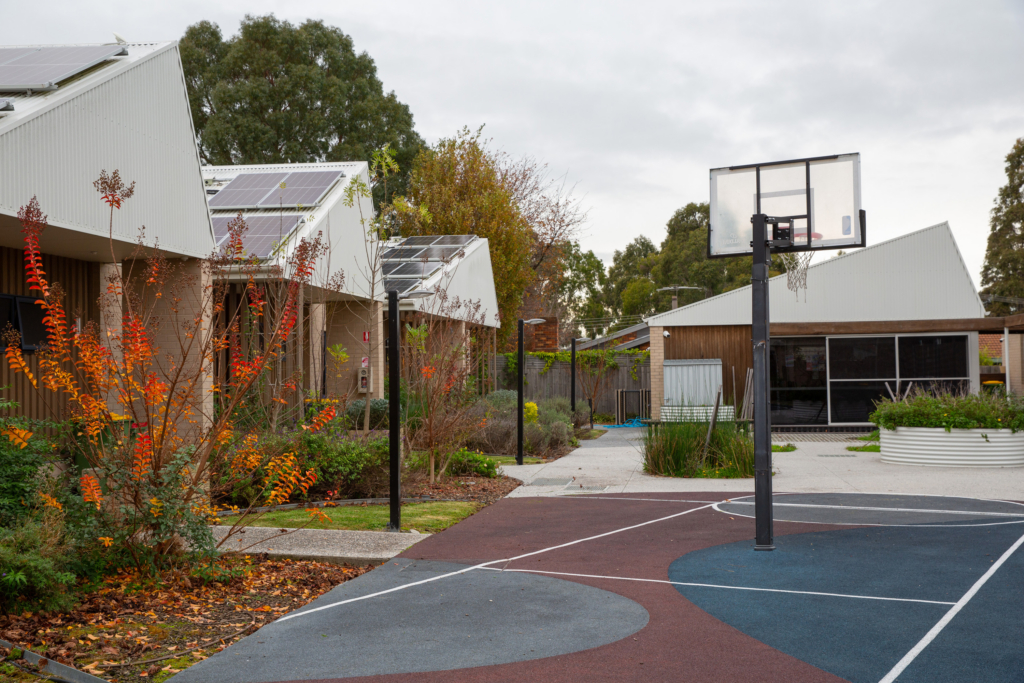
The cost of homelessness is significant to both health and to the public purse. Ensuring everyone has access to housing saves lives and saves money, and it’s high time we invest in stable, long-term, and well-designed social housing as a health intervention in itself. (3)
When my situation forced me to leave my rural hometown at 18, I spent the next year and a half experiencing what I might now describe as ‘hidden homelessness’. I packed everything I owned into the tiny Toyota Corolla I’d saved for (and had got the license to drive three days earlier) and headed for Melbourne. I didn’t have secure accommodation and found myself relying on the generosity of people I’d recently met to lend me a couch or a spare room and went ‘camping’ on the nights I didn’t have another option.
I was homeless; but I was also the friendly swimming teacher at the local pool, the cleaner vacuuming the community hall after hours, and the diligent healthcare student studying hard to become an occupational therapist.
From the outside, things would have seemed somewhat normal. But behind the scenes, my health was suffering. Chronic stress and anxiety were manifesting as chronic pain, and it would be years until I could afford to budget for a visit to the dentist.
I know from this experience that you cannot prioritise health appointments or exercise or eating well when you also have to figure out where you’re going to sleep that night.
Once I was in affordable, longer-term accommodation, I was able to go to the dentist, get treatment for the chronic pain I’d been living with, and access mental health support.
Now that there’s a decade between me and that experience, I can see how much accessing that care changed the trajectory of my long-term health. Indeed, the data suggests that getting into housing was lifesaving for me. In Australia, the life expectancy for people experiencing homelessness is just 55 years of age – more than three decades less than the general population. (4)
Eventually, I was able to finish my studies and graduate as an occupational therapist, and my experience as a healthcare professional has also profoundly shaped my perspective on health and housing.
Occupational therapists are experts in how changing the environment around someone, rather than purely focusing on changing disease or disability itself, can improve people’s health and their ability to do the things they want and need to do in life.
After eight years of working as an occupational therapist with people experiencing mental health challenges who were also experiencing homelessness, it began to feel futile to keep talking to person after person about how they could improve their health, while it was very clear – from my clinical perspective as well as from my lived experience – that stable and well-designed housing was the intervention they actually needed.
Without an environment that provided safety and promoted health, I knew that health gains would continue to feel impossible for many of my clients. These experiences prompted me to leave that work, and shift my focus to housing and homelessness advocacy. I now coordinate the South East Homelessness and Housing Alliance – a group of organisations in the outer southeast of Melbourne working together to build a stronger homelessness response in the community.
When I share this story with people, a common response is: “Do you miss being an occupational therapist now that you do this work?” I respond by explaining that I didn’t leave my work in healthcare for a job in housing advocacy because I don’t want to work towards the health of the community. Rather, the opposite is true: I work in housing advocacy because I know that housing is critical health infrastructure which we urgently need to invest in for a healthy community.
Homelessness is expensive. Not just for people experiencing it, but also for all of society. People experiencing homelessness are more likely to present to social services and emergency departments, and have justice system contact – all of which are government-funded systems.
I once supported a client who was homeless and sleeping in her car. She hadn’t been able to afford to renew the registration when it was due and, as a result, she’d had contact with police and ended up with a court summons.
It was at this point that she referred to our health service for support. After assessing all of her health and legal needs, it was clear that the intervention she needed to improve her health was to get help paying her car rego, and get legal support to get relief from the fines she had accrued for not having been able to pay it in the first place.
This is the hidden cost of homelessness for the taxpayer; the police, court, legal and health intervention she received would have been unnecessary if she’d had housing in the first place, and the data supports this.
Analysis of the cost of being chronically homeless in Australia compared to being housed in supported accommodation has shown that every person who was housed in supported accommodation saved the public purse $17,352 per year. (5, 6).
That number factors in the cost of the delivering the supported accommodation. Even if we only provided supported accommodation to people in Dandenong, where I now work, we’d save over $1.2 million a year on other government services just by housing the 70 people we have counted who are currently sleeping rough on our streets.
As a taxpayer, an occupational therapist, and a human, I can’t come to any other conclusion than that we must invest in ensuring that everyone has access to affordable and well-designed housing. It’s not merely a ‘nice to have’ or a moral obligation – it’s critical health infrastructure and a cost-effective health intervention. We’ve made this investment in our hospital infrastructure because it makes sense, and we can do the same with housing.
End notes:
1. Office of the Victorian Government Architect 2023, The Case for Good Design: Healthcare, Victorian Government, https://www.ovga.vic.gov.au/case-good-design-healthcare-guide-government.
2. Ibid.
3. Mental Health Commission of Canada 2014, National Final Report: Cross-Site At Home/Chez Soi Project, https://mentalhealthcommission.ca/wp-content/uploads/2021/09/mhcc_at_home_report_national_cross-site_eng_2_0.pdf.
4. Australian Institute of Health and Welfare 2025, People with a history of specialist homelessness services support who have died, www.aihw.gov.au/reports/homelessness-services/people-death-shs-support.
5. Inflation-adjusted figure. The study reported a cost saving of $13,100 in 2015.
6. Parsell C, et al. 2017, Cost offsets of supportive housing: evidence for social work, British Journal of Social Work, vol. 47, no. 5, July 2017, pp 1534–53, https://doi.org/10.1093/bjsw/bcw115.